Chasing Umami in Kyoto: The Sacred Architecture of Kaiseki Dining
Authored by Editorial Guild • Issued February 2025 • Documented in Gion & Arashiyama
A centuries-old tea salon in Arashiyama where water temperature and seasonal botany dictate every dish.
Table of Contents
1. Shun: The Temporal Philosophy of Seasonality
In Western dining paradigms, mastery is frequently measured by consistency—the capacity to deliver identical flavors year-round regardless of ambient climate. In Kyoto, this notion is regarded as an affront to nature. The bedrock of kaiseki ryori is shun: the exact ephemeral moment in which an ingredient stands at its absolute peak of vital resonance.
A bamboo shoot may inhabit its true shun for scarcely ten days in early April; sweetfish (ayu) caught along the pristine clear waters of the Hozu river are harvested within a strictly regulated multi-week window. To partake in kaiseki is to eat the calendar itself.
2. The Alchemical Foundation: Dashi & Natural Mineral Waters
Behind the sliding screens of Gion's timber machiya townhouses, masters spend thirty years perfecting broth. The fundamental dashi depends entirely on the softness of Kyoto's subterranean water, aged Rishiri kombu harvested from the subarctic waters of Hokkaido, and katsuobushi shaved moments before extraction.
There are no thick reductions, no overpowering dairy fats. Flavors are translucent, allowing the natural sweetness of winter radish and spring mountain wild herbs (sanshai) to communicate directly with the palate.
3. Ceramics as Landscape: The Vessel and the Course
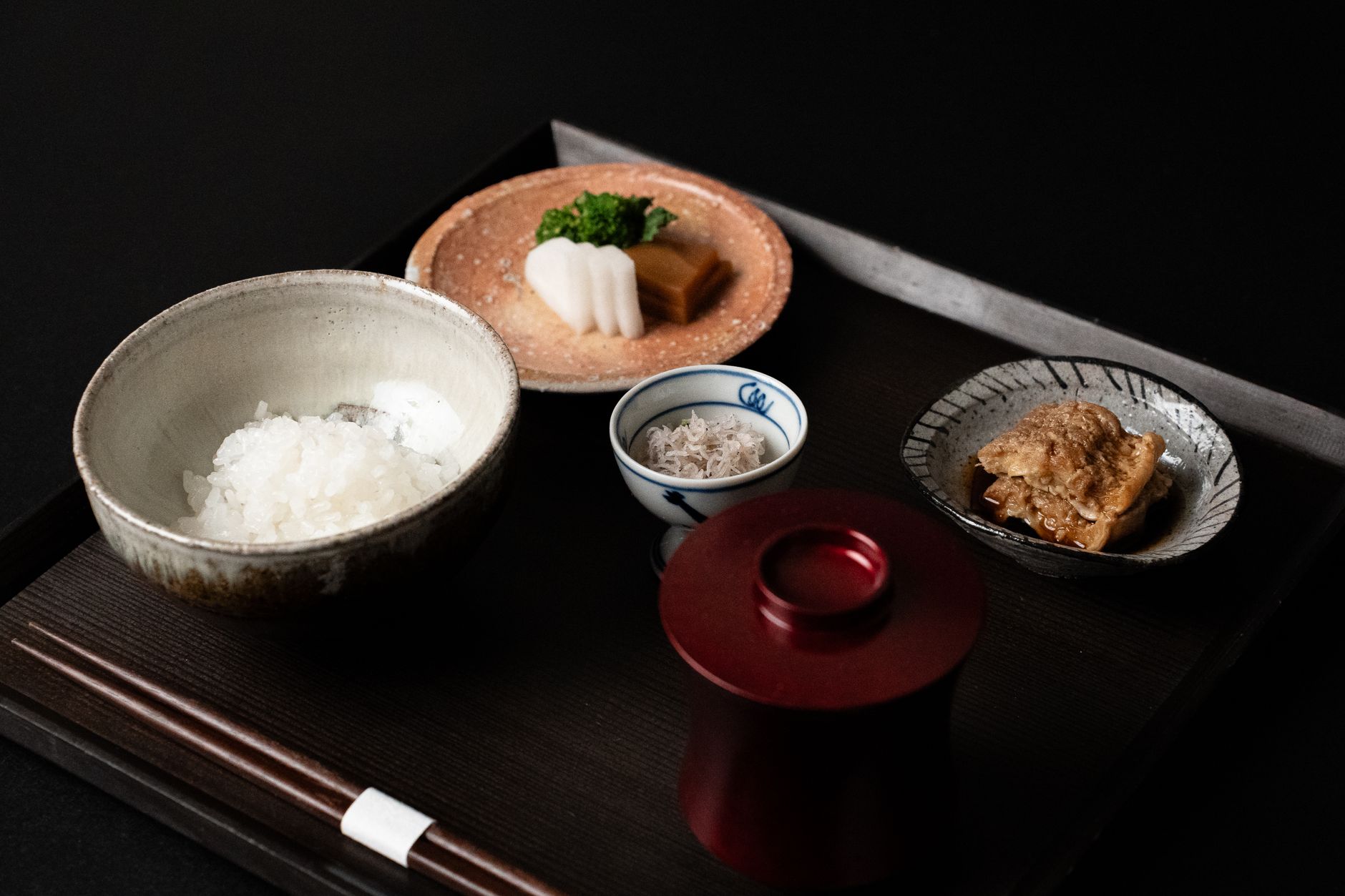
In kaiseki, food and pottery are indivisible. A dish is conceived around antique lacquer bowls and Bizen stoneware that might be two hundred years old. A winter broth is served in deep lidded urushi vessels to retain steam; summer sashimi is arrayed upon raw frosted glass or bamboo leaves that mimic mountain cool.
- Oribe Ware: Characterized by vivid green copper glazes and deliberate geometric asymmetry.
- Karatsu Ware: Earthy, understated stoneware rooted in Korean potting traditions.
- Wajima Lacquer: Multiple coatings of refined sap providing warm tactile intimacy against the lip.
4. Etiquette for Mindful Dining in the Ancient Capital
When entering a traditional ryotei, guests remove their shoes, transitioning from the coarse stone of the street to pristine rush-tatami mats. Strong synthetic fragrances or perfumes must be strictly avoided, as olfactory subtlety is central to the tea-derived cuisine. Photographs, if permitted, should be executed quietly without artificial flashes or intrusive hardware.
Inquire into Culinary Guild Access
111111 arranges discreet gastronomic introductions and private tea estate visits across the Kansai basin.
Consult Our Editorial Desk